Eating all over the world: A - Australia
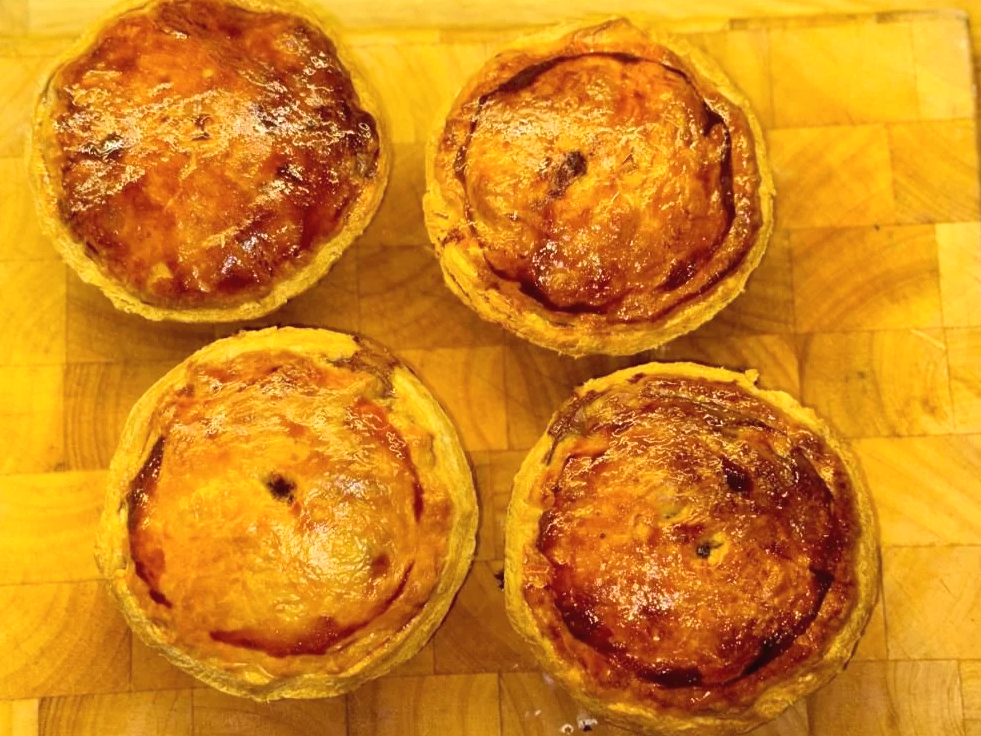
When we decided to showcase different foods from around the world, it became obvious fairly early on that we needed Australia to be included in this list because of how exciting the food scene is there.
On first thought you might think Australian food is all barbecues, lamingtons and pavlovas, in reality however it is a wonderful melting pot of cuisines, it has embraced home grown foods and sustainability, has a strong café culture and many world-class restaurants with exciting chefs.
For me, Masterchef Australia has been hugely influential not only in Australia, but also around the world. It is thanks in part to Masterchef Australia that the Australian food scene has come along so far and now really showcases the country’s wonderful high-quality, fresh home grown produce - fruits and vegetables (finger limes are among my favourite things as the little segments just burst with flavour), meats, seafood and fish, really interesting native indigenous ingredients and, of course, wine.
I have watched and enjoyed Masterchef UK from the days of Lloyd Grossman but watching Masterchef Australia series 1 you could sense how very different it was, and how exciting. You really got a sense of how big this was going to be and certainly for the first 10 series or so it just got better and better and better and I personally learnt so much from it and got even more interested in food. The ‘contestants’ move into a shared house for the duration of their competition and not only share their knowledge but also learn from chefs, they are encouraged and tutored and are expected to study daily and just learn learn learn the whole time. They are constantly being pushed to be bigger and better and braver, taking chances to stand out that maybe they once would not. There are challenges both individual and team ones and they have to learn to think on their feet and react quickly. Seeing a home cook strive to be the very best and honestly being at a near professional level when they left for me it really sparked something.
One of my favourite challenges is one of the elimination challenges where the contestants up for elimination take the same recipe, identical ingredients and set about following the guest chef’s recipe. The results were fascinating because they were often all so different, how they interpreted the recipe, how they made things, how they cooked and seasoned and plated up were all so different. When we first started our website and started coming up with recipes you realise that although you take time to perfect them, any number of things can influence whether that recipe comes out as intended or not. It used to worry me a lot but I now try to remind myself that you can’t control everything, all we can be is there to pick up on comments and help when asked.
When I was trying to decide what to showcase for Australia I discovered there are many different foods that are hotly contested Between Australia and New Zealand, lamingtons, pavlova and flat whites being just a few. So what is Aussie food? I thought about the barbecue but, being the middle of winter and having rained for what feels forever, I didn't fancy all the recipe testing outside. Therefore we decided to go with the original Aussie takeaway - the iconic meat pie.
The Australian meat pie is anything from travel food for long road trips to simply a quick lunch/pick me up. In recent years the pie scene in Australia has really taken off and pie shops are popping up throughout the country. The traditional pie (which would have been lamb or beef mince) has made way for more other more modern fillings, many borne from the different cuisines and cultures found throughout Australia. Pies are so popular that there is even annual Great Aussie Pie Competition.
Having thoroughly researched the pie I learnt that the meat pie should be:
~ Savoury
~ Hand sized
~ Robust enough to contain the filling without collapsing when you start eating
~ A buttery crumbly shortcrust pie base
~ A gorgeous flaky puff pastry lid.
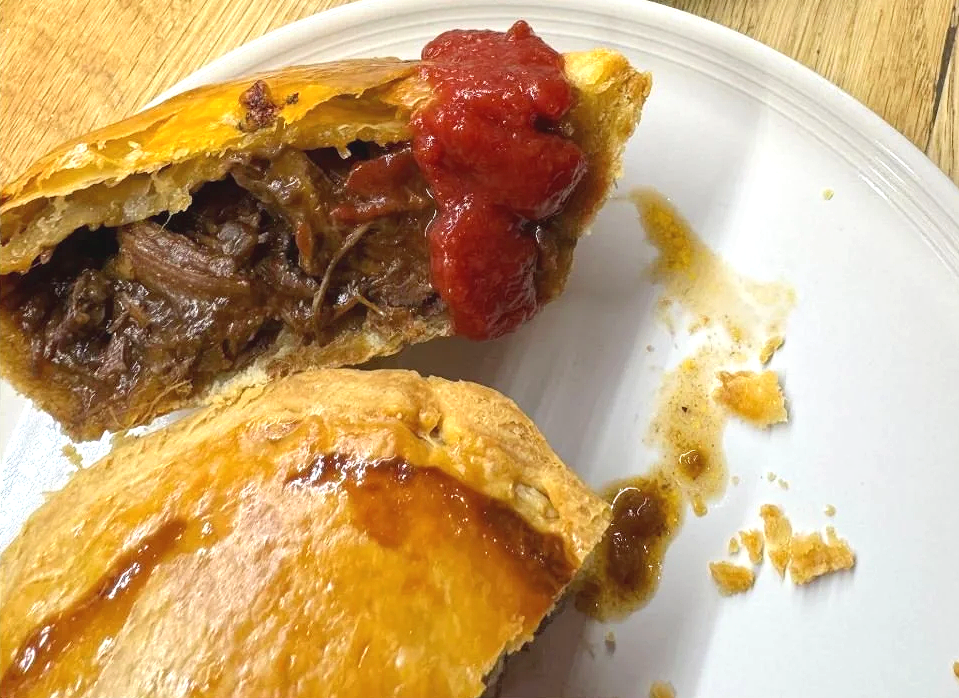
~ The filling needs to have just enough gravy to keep the meat moist without having so much gravy that it will drip or run out as you take a bite, you definitely do not want your top stained whilst you enjoy a cheeky pie!
~ Apparently, covered in ketchup?
As we began researching and testing I knew that it was important that our pie was absolutely filled with flavour, so that after eating one you were left just wanting more. Once we decided to go traditional with our flavours, we just needed to decide between minced beef or beef chunks. Mince is what would originally have been used (most likely because traditionally housewives used to cook the roast on Sunday's and then mince any leftover meat for meals at the start of the next week), however chunks have started to gain popularity, probably because they tend to have more flavour. I knew I wanted our pie to be beef because that seems to be the original now. I like using shin for slow cooks because I love the flavour it has over and above most other cuts. After some testing I did decide to shake it up a little and go modern with pulled beef. I don’t usually make pulled beef but loved the meat to gravy ratio of pulled beef pies and because the gravy was used to cook the beef, it has so much flavour in it. We also decided to use some Vegemite in them because what is more Australian than Vegemite and the umami hit it gives is second to none (well actually that is not strictly true because marmite does a similar thing and, being English, I prefer marmite - obviously).
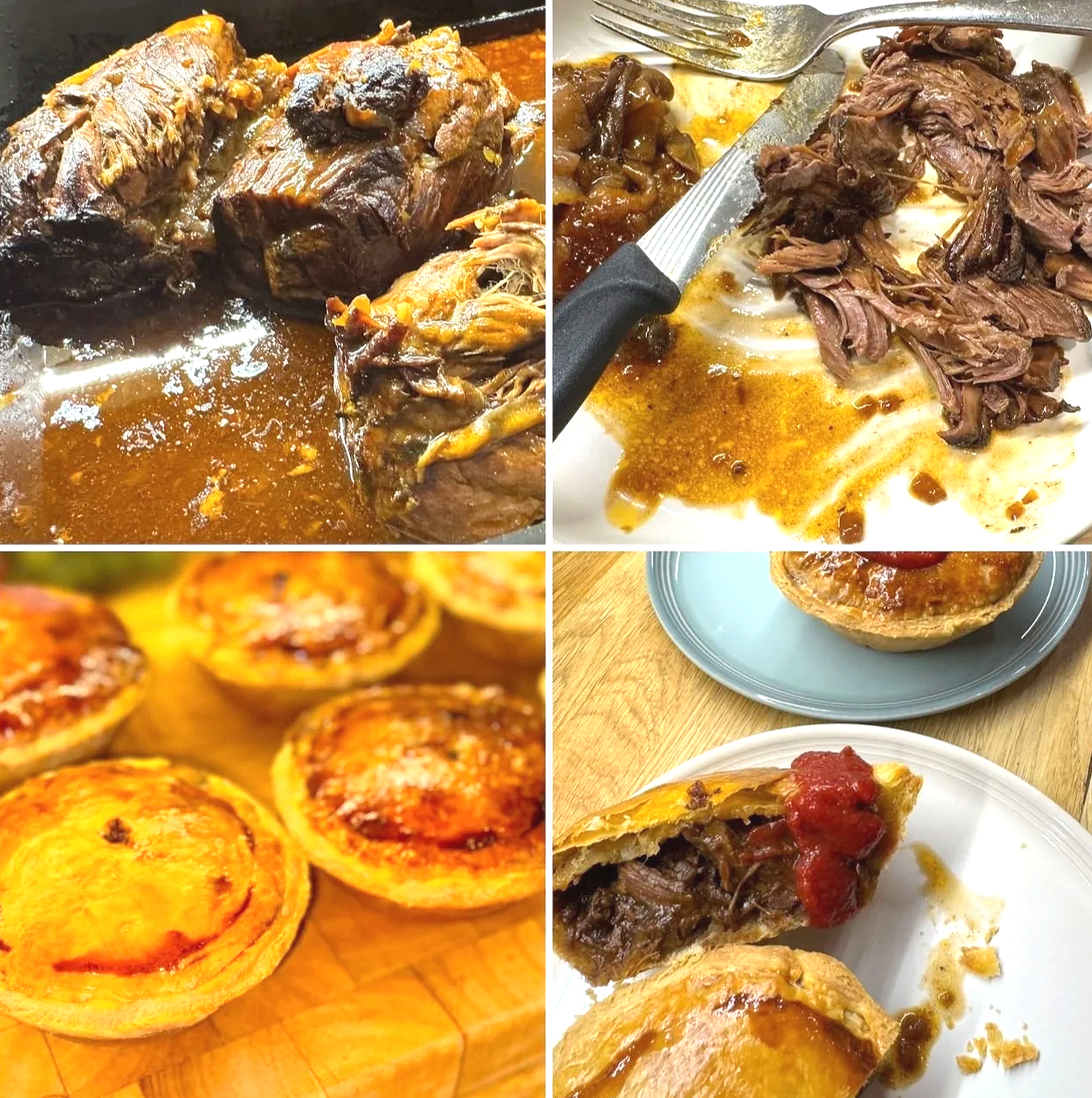
I think we have hit on the absolute best pie we could have, I made the buttery pastry but you can use ready made/ready rolled. If you have the time to make your own, please do. It really is not difficult at all you just need to allow resting time. The important thing to remember with whatever pastry you use is to chill - both the pastry to stop the shrinkage and the filling, you must make sure that the filling is cold or the butter in the pastry will melt and go soft and you won’t get such a great rise.
If you would rather make a large family sized pie you can, just use a 20-23cm pie tin, following the instructions for the smaller pies.
This recipe is a long cook but not a difficult one and most of the cooking time is hands off. After browning the meat you essentially throw everything in an oven dish and then cook it for 4 hours. This is perfect to start either the day before or early on in the day as then there is cooling time.
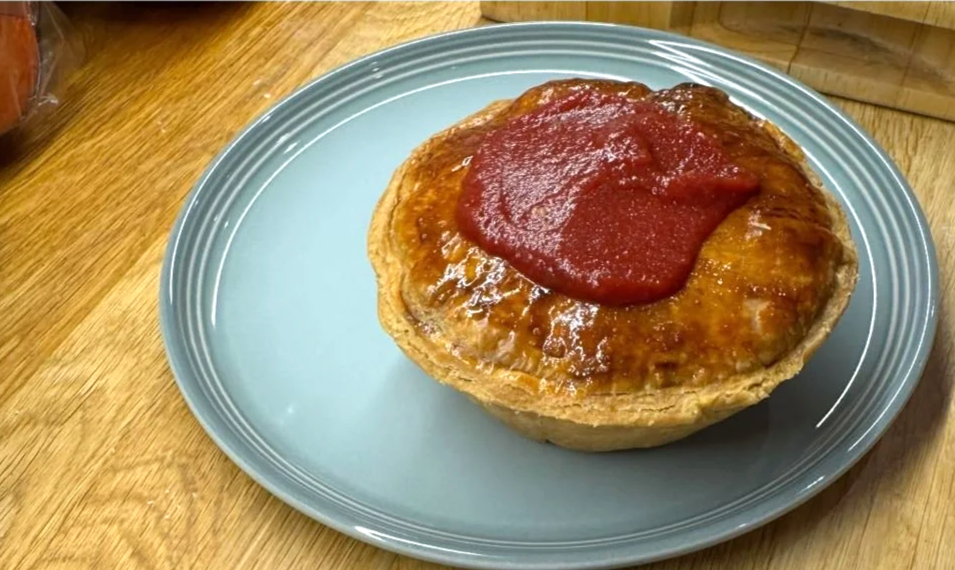
After cooking your pie, leave them to sit for just a few minutes before taking out of the moulds then smear ketchup over the top and tuck in.
We hope you like our little taste of Australia, hopefully in a couple of weeks we can channel Australia with the barbie.
Next stop, Brazil.